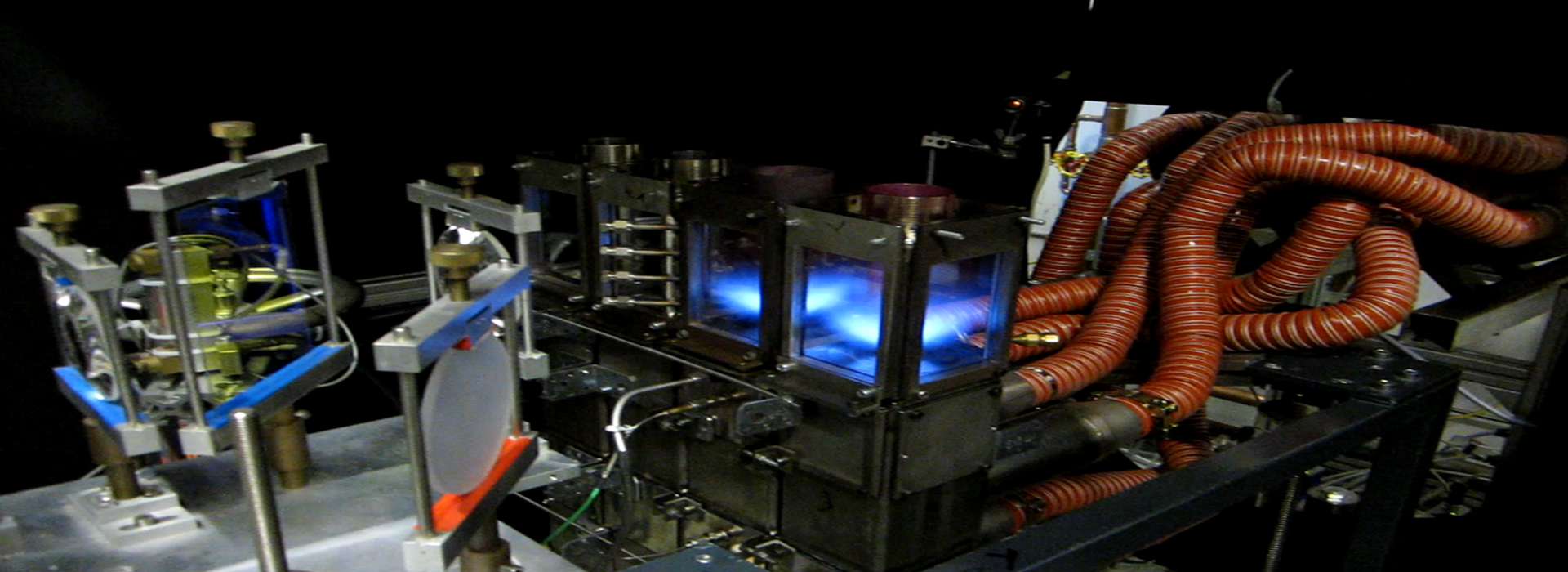
Welcome to Combustion Technology
The Combustion Technology Division of the Engler-Bunte-Institut comprises of the Chair for Combustion Technology and the Chair for Simulation of Reacting Thermo-Fluid Systems. The division pursues research on reacting flows from gaseous, liquid and solid fuels by means of various measurement methods and numerical modelling approaches. The research center for fire protection technology is part of the Chair for Combustion Technology and deals with research and development work in the field of preventive fire protection.
Prof. Dr.-Ing. Dimosthenis Trimis holds the Chair for Combustion Technology. The Chair for Simulation of Reacting Thermo-Fluid Systems is held by Prof. Dr. Oliver T. Stein.
Research
Teaching
Staff
Jobs
Bachelor and Master theses
News

Researchers from EBI-VBT and EBI-TFS were represented with numerous contributions at the 41st International Symposium on Combustion in Kyoto, Japan. In total, twelve papers and two Work-in-Progress posters were presented. The contributions covered a broad range of current experimental and numerical research: from the combustion of reactive metals, ammonia, hydrogen, and aviation fuels as well as combustion in porous media to novel diagnostic approaches.
Photo: Gabriel Thäter, Malte Seitz, Rishabh Puri, Dr.-Ing. Samarjeet Singh, Martin Kannengießer, Maurus Bauer, Dr.-Ing. Fabian Hagen, Dr.-Ing. Thorsten Zirwes, Prof. Dr. Oliver T. Stein, Prof. Dr.-Ing. Dimosthenis Trimis.

Fabian Hagen was awarded the Bernard Lewis Fellowship at this year’s 41st International Symposium on Combustion in Kyoto, Japan. The biennial award of The Combustion Institute has been presented since 1996 and recognizes excellent research in combustion by young scientists.

The Gesellschaft der Freunde des Engler-Bunte-Instituts am KIT e.V. annually awards the Engler-Bunte Institute Prize for outstanding master’s theses in the fields of process engineering, energy, and water. The prize recognizes work distinguished by exceptional commitment, creativity, and methodological excellence.
In 2026, Hanna Hülsmann, M.Sc., received the award for her thesis entitled “Proof of concept: Experimental and numerical investigation of ammonia combustion in a counterflow reactor ”. The thesis was carried out under the supervision of Professor Trimis, with scientific guidance from Dr. Fabian Hagen and Daniel Kretzler. Ms. Hülsmann is now a doctoral researcher at the Engler-Bunte Institute, Combustion Technology, focusing on high-pressure hydrogen combustion. We warmly congratulate her on this award and wish her continued success in her research.
Photo: Dr. Martin Bernhart (Board Member of the Gesellschaft der Freunde des Engler-Bunte-Instituts), Hanna Hülsmann and Professor Dr.-Ing. Dimosthenis Trimis (supervisor).
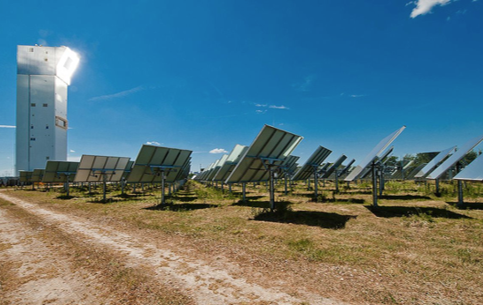
The partial project executed by KIT focuses on the technical implementation of combustion. It is planned to develop a lab-scale sulfur burner for stable combustion in the range from 10 to 50 kilowatts at high power densities under atmospheric conditions and temperatures higher than 1400°C. Power density in particular allows for the effective use of sulfur as a fuel for electricity production. “Although combustion often is associated with fossil technologies, we want to show that it also is an important element in the context of the energy transition,” Prof. Trimis says.
Link_more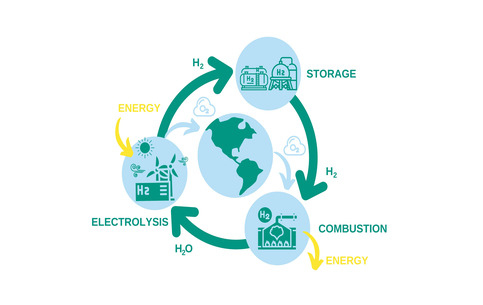
With the progressing decarbonization of the energy market, hydrogen will play an important role in end applications in the near future and will be available on a large scale. With the hydrogen strategy of the "European Green Deal", the European Commission has set itself the goal of hydrogen taking in an integral part of the integrated energy system.
Link_more